
China DMC Current location:HomeChina DMC
 Time: 2026/6/29
 Hit: 146
XINJIANG
DESTINATION GUIDE
───────────────────────────────────────────────────────
Where Silk Road Heritage Meets Majestic Landscapes
Brand: Oriental Surprises Travel | www.orientsurprisestravel.cn
──────────────────────────────────────────────────
Xinjiang Uygur Autonomous Region — China's largest province-level division — occupies more than 1.6 million square kilometers in the nation's far west, accounting for roughly one-sixth of the country's total land area.
Nestled at the historic crossroads of the ancient Silk Road, Xinjiang has been a convergence point of civilizations for over two millennia. Today, it is home to 13 ethnic groups including the Uyghur, Kazakh, Hui, Kyrgyz, and Tajik peoples, each contributing to a rich tapestry of language, music, cuisine, and tradition.
Its landscapes are nothing short of planetary in scale: snow-capped peaks of the Tianshan and Altai mountains, the vast Taklamakan and Kumtag deserts, alpine meadows teeming with nomadic herders, and crystalline lakes that shimmer at elevations above 2,000 meters. From the southern rim of the Taklamakan — China's largest desert — to the flower-carpeted Ili Valley in the north, Xinjiang offers some of the most extraordinary scenery on Earth.
?? Capital: Urumqi | ??? Languages: Uyghur, Mandarin, Kazakh | ?? Currency: Chinese Yuan (CNY)
──────────────────────────────────────────────────
01 Kanas Lake
Altay Prefecture — Altitude 1,374m
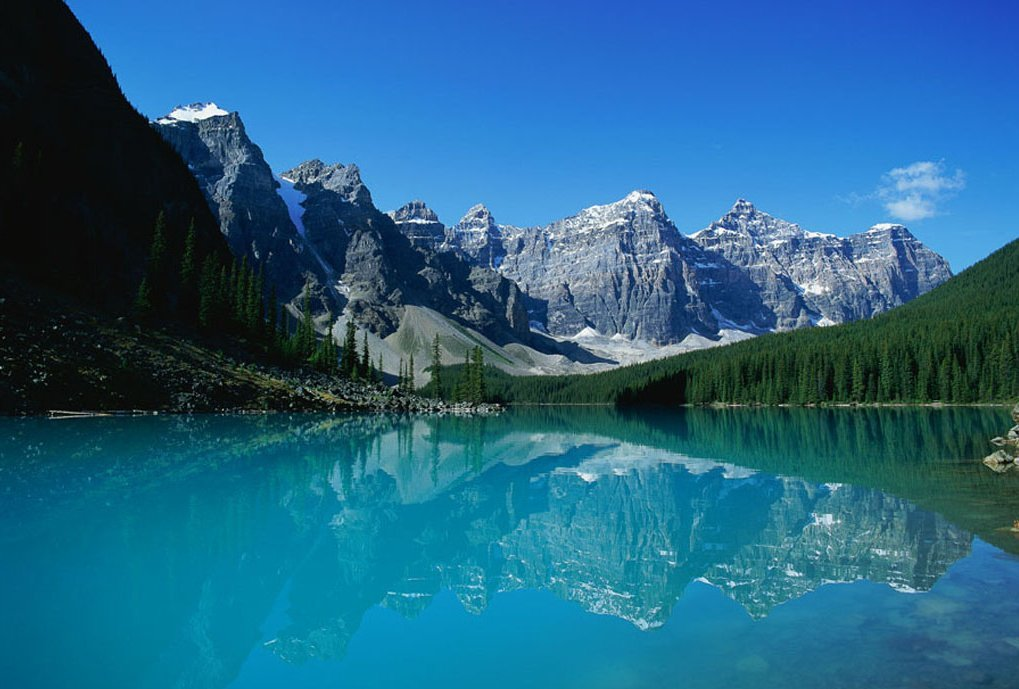
Known as the "Switzerland of the East," Kanas is a glacial lake of extraordinary beauty. Its turquoise waters shift between emerald and deep azure, surrounded by golden larch forests in autumn and snow-capped peaks year-round. The legendary "Kanas Monster" — likely a large Hucho taimen fish — adds an air of mystery. The Three Bays — Moon Bay, Dragon Bay, and Fairy Bay — form one of Xinjiang's most photographed landscapes. Nearby Hemu Village and Guanyutai viewpoints offer dreamlike panoramas.
··················································
02 Tianshan Heavenly Lake
Urumqi — Altitude 1,910m
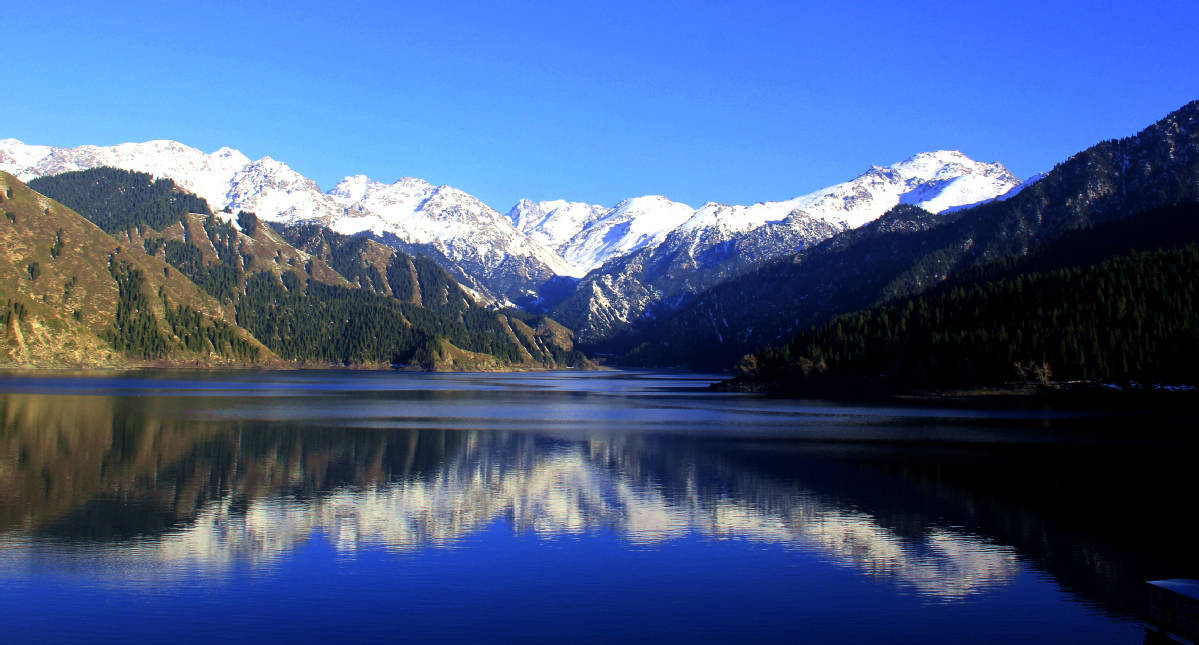
Lying in a glacial valley beneath the majestic Bogda Peak (5,445m), Heavenly Lake — or Tianchi — is a UNESCO World Heritage component site. The crescent-shaped lake is crystal-clear, reflecting snow-clad mountains and dense spruce forests. Rich in legend, it is said to be where the Queen Mother of the West (Xi Wangmu) hosted feasts for the Eight Immortals. Visitors can hike the 9km wooden walkway, ride the cable car to Horse Tooth Mountain for panoramic views, or take a boat across the mirror-like water.
··················································
03 Dushanzi Grand Canyon
Kuitun — Northern Xinjiang

Carved over millennia by wind, rain, and snowmelt from the Tianshan Mountains, the Dushanzi Grand Canyon is a masterpiece of natural erosion. Its steep walls display distinct gray and black sedimentary strata that resemble the work of thousands of invisible sculpting blades. Standing at the canyon's edge, visitors are treated to a classic grand panorama — a must for photography enthusiasts. It has served as a filming location for numerous films and TV dramas.
··················································
04 Nanshan Pasture
Urumqi — 45km from City Centre
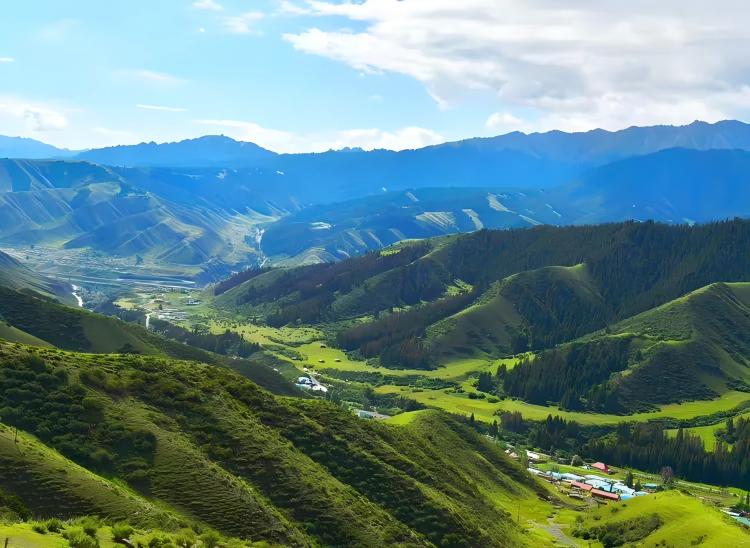
A beloved escape for locals and visitors alike, Nanshan Pasture showcases the classic beauty of Xinjiang's alpine grasslands. Rolling green hills, meandering streams, Kazakh yurts dotting the meadows, and grazing flocks of sheep create an idyllic pastoral scene. Visitors can ride horses across the vast meadows, stay in traditional yurts, and taste authentic Kazakh milk tea and hand-grabbed lamb. The region is particularly stunning in summer when wildflowers carpet the slopes.
··················································
05 Kashgar Old City
Kashgar — Southern Xinjiang
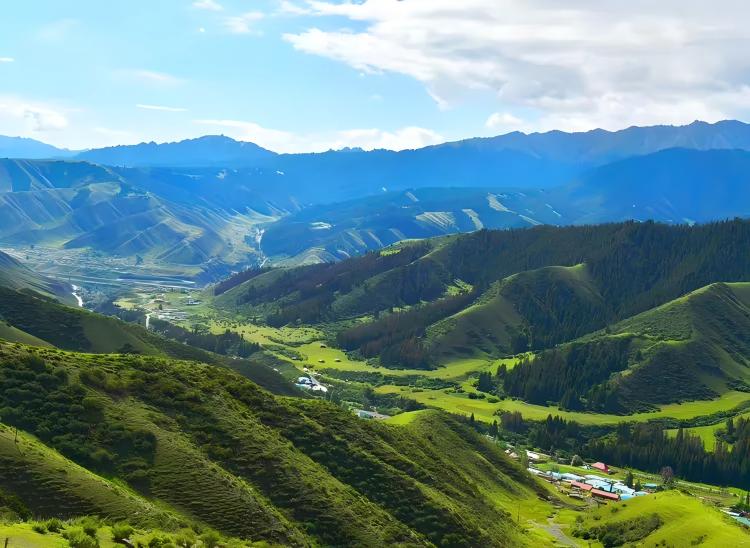
One of the oldest, most atmospheric cities on the Silk Road, Kashgar's Old City is a living museum of Uyghur architecture and lifestyle. Its narrow, winding alleys are lined with centuries-old earthen houses, artisan workshops, and vibrant bazaars. The Sunday Grand Bazaar — one of the largest in Central Asia — overflows with spices, carpets, dried fruits, and handcrafted goods. The Id Kah Mosque, with its stunning azure domes, stands at the city's heart, while the Jiaman Brima and Abakhan Tombs reveal centuries of cultural exchange.
··················································
06 Taklamakan Desert (塔克拉玛干沙漠)
Southern Xinjiang — Area: 327,000 km2

The Taklamakan — meaning "You can go in, but never come out" in Uyghur — is China's largest desert and one of the world's largest shifting sand deserts. Its golden dunes, some reaching over 200 meters high, create an otherworldly landscape of rippling waves frozen in time. The Silk Road once skirted its edges, and archaeological treasures — ancient manuscripts, Buddhist murals, and mummified remains — have been unearthed from lost desert settlements. Today, desert safaris, camel treks, and night camping beneath star-filled skies offer an unforgettable immersion.
··················································
07 Grape Valley
Turpan — Eastern Xinjiang
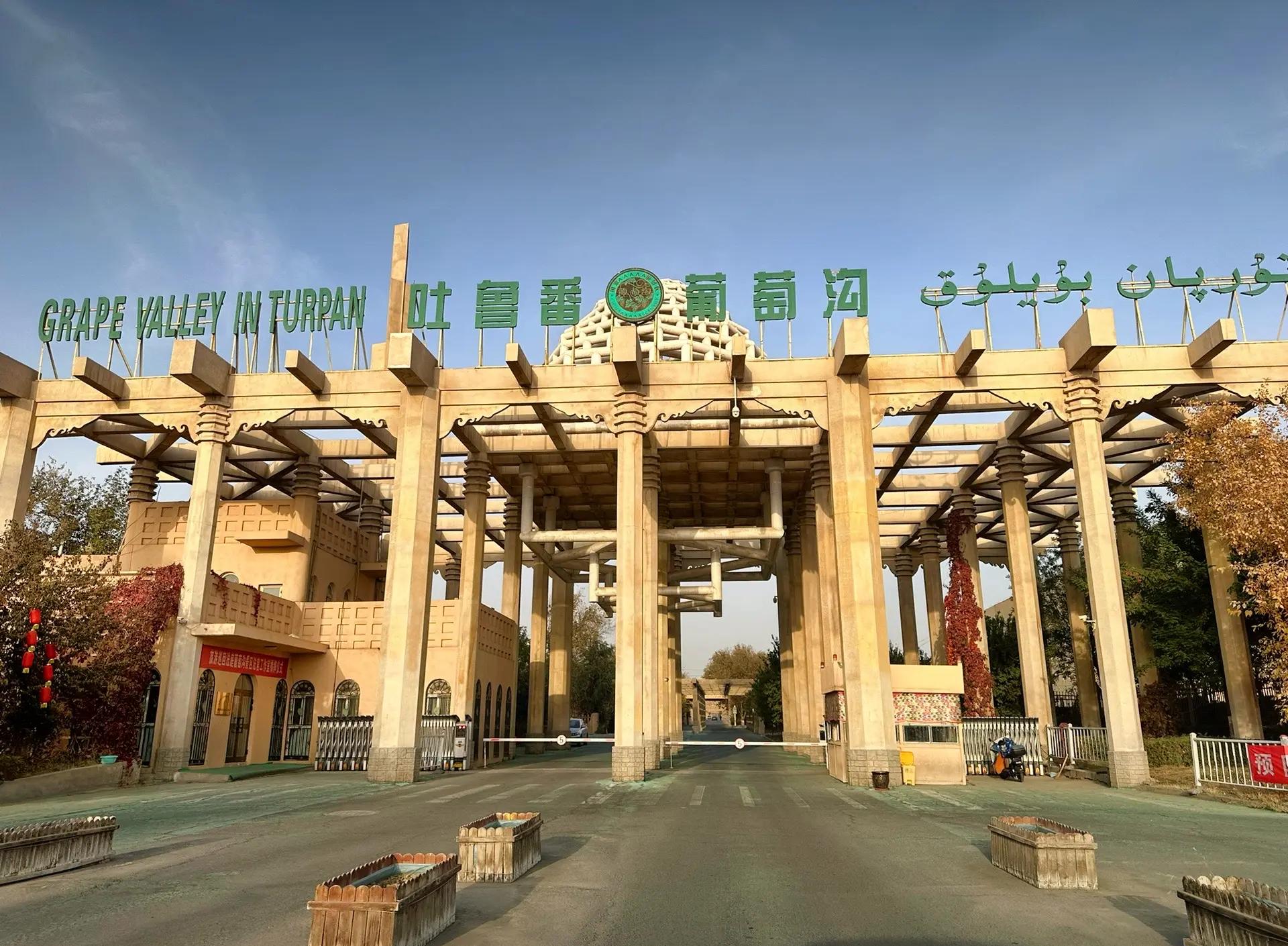
Fed by melting snow from the Flaming Mountains (火焰山), Grape Valley is a verdant oasis in the heart of one of China's hottest and lowest-lying basins. Lush vineyards stretch for kilometers, producing the legendary seedless hami grapes and the rich "Mongolian grape" (马奶子) that have made Turpan famous for 2,000 years. Visitors can walk beneath shaded arbors, sample freshly dried raisins and sweet dried apricots, and explore traditional Uyghur cave dwellings built into the hillside. Nearby, the ancient city of Jiaohe and the submerged ruins of Gaochang tell the story of Silk Road commerce.
··················································
08 Sayram Lake
Ili — Altitude 2,073m
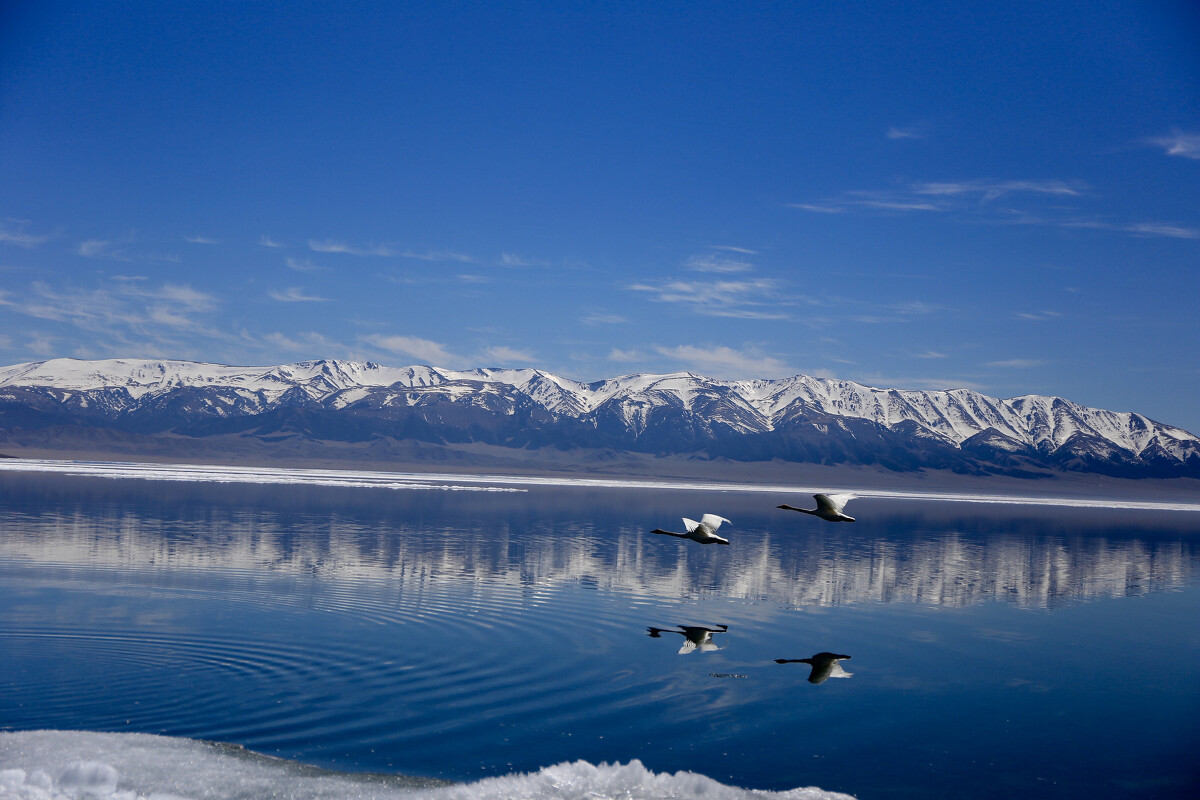
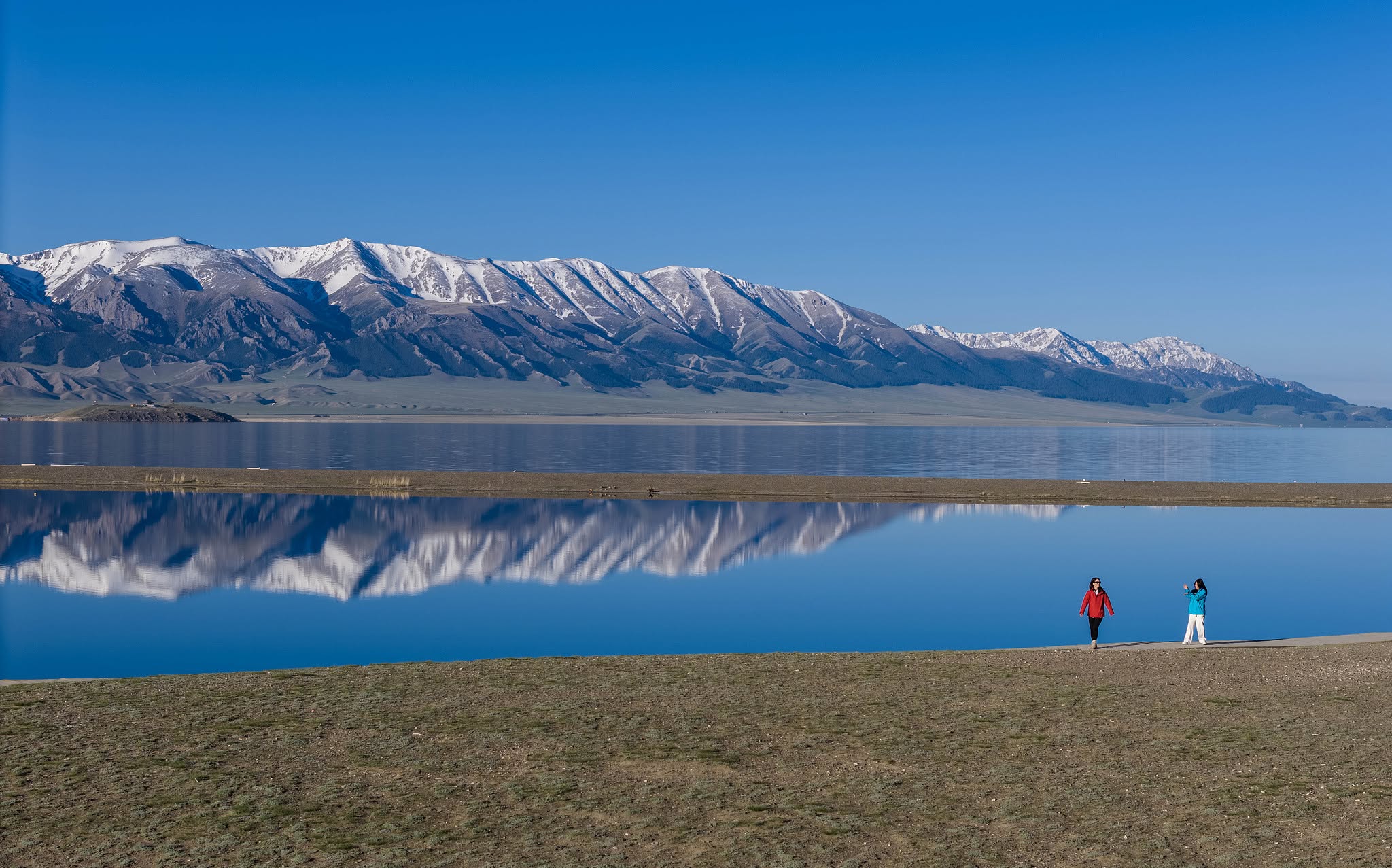
Known as "The Last Tear of the Atlantic Ocean," Sayram Lake is the highest and largest alpine lake in Xinjiang. Its pristine waters — astonishingly clear and deep blue — are hemmed by snow-dusted mountains and flower-filled meadows. In June and July, the lakeshore explodes with colorful wildflowers: yellow buttercups, purple iris, and white edelweiss. The lake's legendary beauty has inspired poets and painters for centuries. A scenic loop road allows visitors to circle the entire lake and capture every angle.
··················································
09 Bosten Lake
Bayangol — Southern Xinjiang
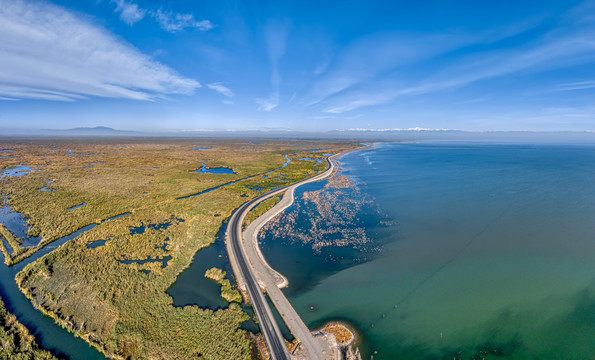
The largest inland freshwater lake in China, Bosten Lake is a paradise of wetlands, reed beds, and open water spanning over 1,000 km2. Located in the heart of the Yanqi Basin, it serves as a critical ecological hub along the migratory bird route between East Asia and Central Asia. In summer, vast lotus and water lily fields bloom across the shallows, while Kazakh fishing communities maintain their traditional way of life on the shores. Boat tours through the lotus fields are a highlight.
··················································
10 Ili Lavender Fields
Ili Valley — June to July Peak Season
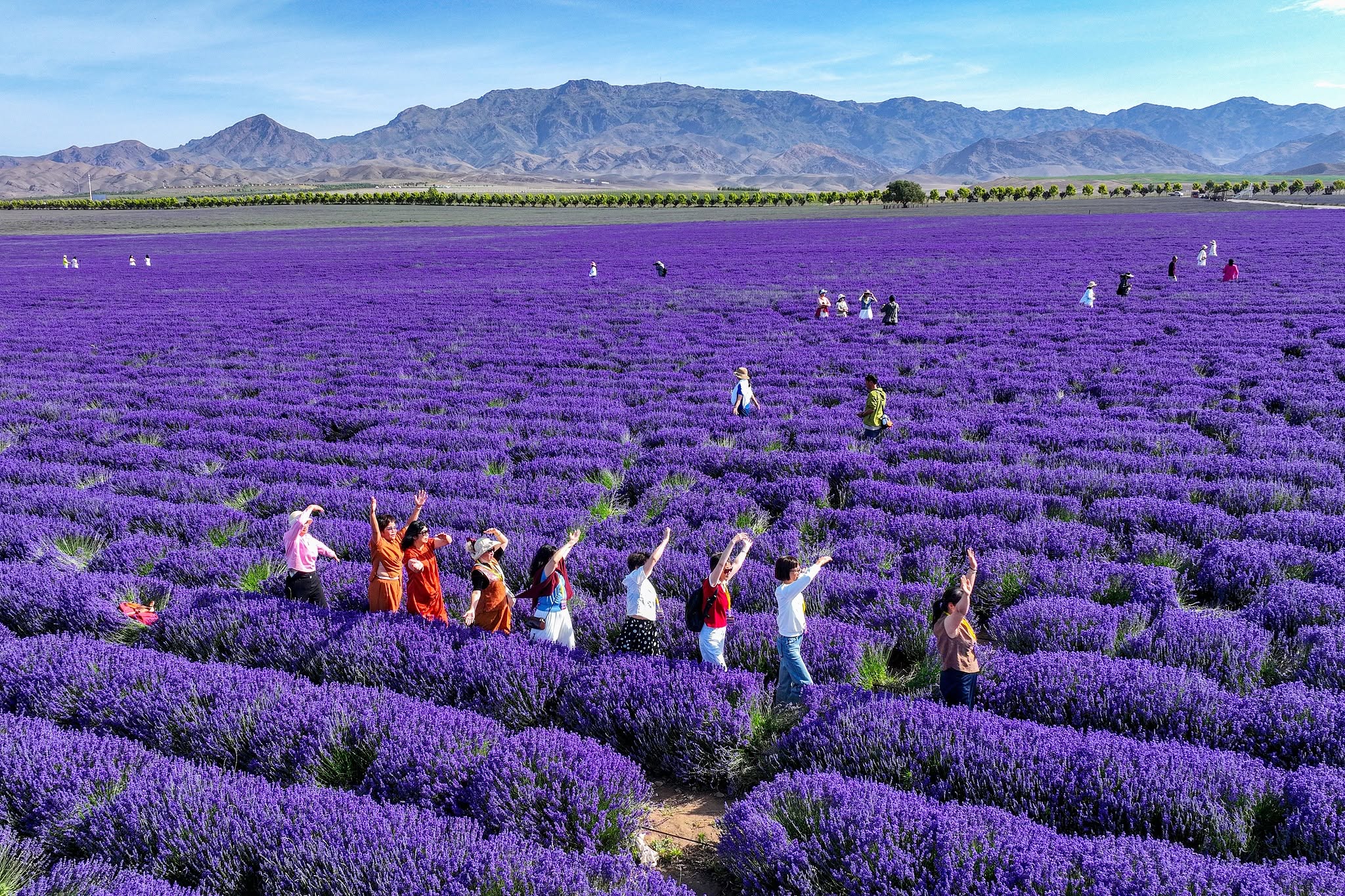
The Ili Valley is home to China's answer to Provence — nearly 100,000 mu (about 67 km2) of lavender fields that bloom in waves of rich purple every summer. Nestled between the outer Tianshan mountains and the Zhaosu grasslands, the valley produces some of the world's finest lavender oil. At peak bloom (mid-June to early July), the fields become a sea of violet that extends to the horizon, with the snow-capped mountains as a breathtaking backdrop. Visitors can tour distilleries, purchase pure lavender essential oil, and stroll through lavender-themed villages in Huaxi and Jiangbashi .
··················································
──────────────────────────────────────────────────
Uyghur Music & Dance
The soul of Xinjiang pulses through its music and dance. The Uyghur "Twelve Muqam" — a complex fusion of song, dance, and instrumental music — is a UNESCO Intangible Cultural Heritage masterpiece. Traditional performances feature the dombra (long-necked lute), rawap (plucked instrument), and the dap (frame drum), while dancers perform the iconic "whirling" style with elegant hat throws and fluid arm movements. Attend a performance at the Grand Bazaar in Urumqi or a traditional chong baar (tea house) in Kashgar.
Bazaar Culture
No visit to Xinjiang is complete without immersing yourself in its legendary bazaars. The Erdaoqiao Grand Bazaar in Urumqi is a sensory feast — thousands of vendors selling spices, dried fruits, handwoven carpets, jade, silver ornaments, and traditional hats. The Sunday Grand Bazaar in Kashgar, one of the largest covered markets in the world, has been operating continuously for over 2,000 years. Bargaining is an art form, and the experience of navigating the bustling aisles is as memorable as any monument.
Desert & Silk Road Exploration
Walk in the footsteps of ancient caravans along the Silk Road. Explore the cave temples of Simsim near Turpan, the ruined Silk Road cities of Jiaohe and Gaochang, and the ancient Khotan Kingdom sites. Take a camel caravan across the edge of the Taklamakan, camp under the stars in the dunes, and learn about the oasis cultures that sustained trade between China and the Mediterranean for over a millennium.
Nomadic Life Experience
Stay in a traditional Kazakh yurt on the Nanshan or Narat grasslands. Participate in daily nomadic activities: horse riding, sheep herding, milking yaks, and preparing traditional foods. Experience the warm hospitality of Kazakh families who still follow seasonal migration patterns between high summer pastures and winter lowlands. The "satr" (Kazakh feast) with roasted lamb and fermented mare's milk (kumis) is an unforgettable cultural encounter.
──────────────────────────────────────────────────
Xinjiang cuisine is a glorious fusion of Central Asian, Persian, and Chinese influences — bold flavors, generous portions, and an unmistakable smoky character.
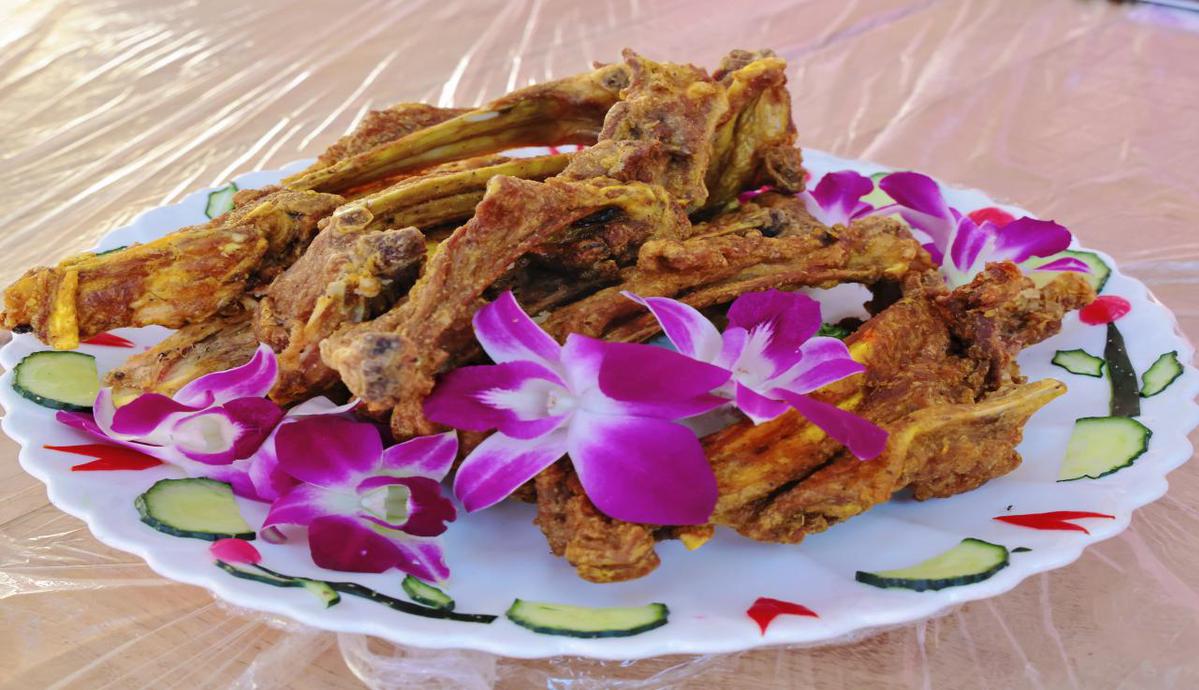
Lamb Kebab — The quintessential Xinjiang street food. Chunks of tender lamb are marinated with cumin, chili, and salt, then grilled over charcoal embers until smoky and charred. Best eaten at night from a street vendor, torn from the skewer with fresh nan bread.
Pilaf / Polo — A celebratory rice dish of saffron-tinted long-grain rice cooked with tender lamb, carrots, onions, and dried apricots. Traditionally eaten by hand, pilaf is a centerpiece of Uyghur feasts and special occasions.
Big Plate Chicken — A hearty communal dish of chunky chicken pieces braised with potatoes, green peppers, and Wide-handled noodles (皮带面) swimming in a rich, spiced chili broth. Named for the oversized plate on which it is served.
Nan Bread — Xinjiang's answer to flatbread — circular, chewy, and often sesame-topped, nan bread is baked in large clay ovens (tandoor). It stays fresh for days and is the perfect accompaniment to any meal — or a meal in itself.
Dried Fruits & Nuts — Turpan is the grape and dried fruit capital of China. Sample hand-strung raisins, dried apricots, dried figs, walnuts, and the prized hami melon — a fragrant, crunchy melon that can be stored for months. Available at every bazaar in enormous varieties.
Herbal Tea & Grape Wine — Served in traditional Uyghur chong baars, Xinjiang's sweetened herbal tea (with jujube, goji, and saffron) is a social ritual. The region also produces increasingly acclaimed wines from the Turpan and Shanshan valleys, where viticulture dates back 2,000 years.
──────────────────────────────────────────────────
Best Seasons to Visit
Northern Xinjiang (Kanas, Sayram Lake, Ili): Late May to October — peak color in September-October. Southern Xinjiang (Kashgar, Turpan): April to June and September to November — avoid the extreme summer heat (45°C+ in Turpan). The Duku Highway opens mid-June through early October.
Planning for Vast Distances
Xinjiang is enormous — attractions are often 300–600 km apart. Allow at least 10–15 days for a meaningful Northern Xinjiang circuit, or 7–10 days for Southern Xinjiang. Internal flights (Urumqi ? Kashgar, Urumqi ? Hotan) save significant travel time. Book accommodations and transportation well in advance during peak season (July–September).
Climate & Clothing
Xinjiang has extreme temperature variations: hot deserts (40°C+) and cold mountain nights (0°C). Layers are essential. UV radiation is intense at altitude — bring sunscreen, sunglasses, and a wide-brim hat. Dry climate (10–30% humidity); drink plenty of water and apply moisturizer.
Money & Payments
Cash is preferred in rural markets and small vendors. Alipay and WeChat Pay are accepted in cities and larger establishments. ATMs are available in all cities. Carry some RMB for bazaar purchases.
Language
Mandarin is widely understood in tourist areas. In rural Kashgar and Turpan, Uyghur is the primary language. Learning a few phrases — "Rahmat" (thank you), "Yeksun" (hello) — is greatly appreciated by locals.
Health & Safety
Altitude sickness can occur at Sayram Lake (2,073m) and the Pamir Highway. Acclimatize slowly. Xinjiang has excellent infrastructure and is generally very safe for travelers. Respect local customs, especially during Ramadan in predominantly Muslim areas.
CONTACT US
──────────────────────────────────────────────────
Oriental Surprises Travel
Your Gateway to the Wonders of Xinjiang
 Contact us :



WeChat

WhatsApp
Copyright ©2026-2031 Terms of Service Privacy Policy Return Terms Travel agency qualification number